
Cynara (2000)
Released Danú 012 (2000)
Available HERE and on all streaming services
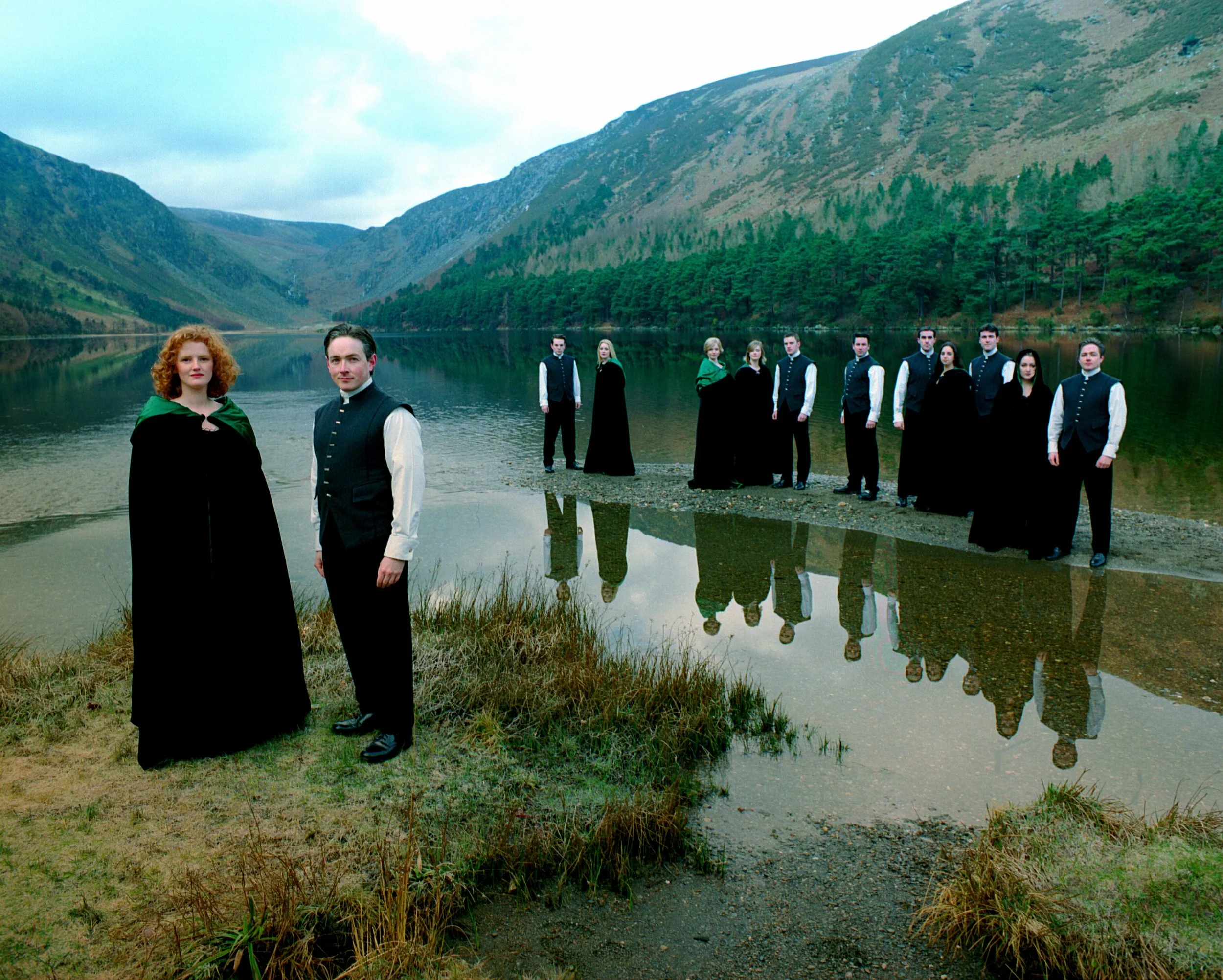
Image Julia Hember, Glendalough 1999
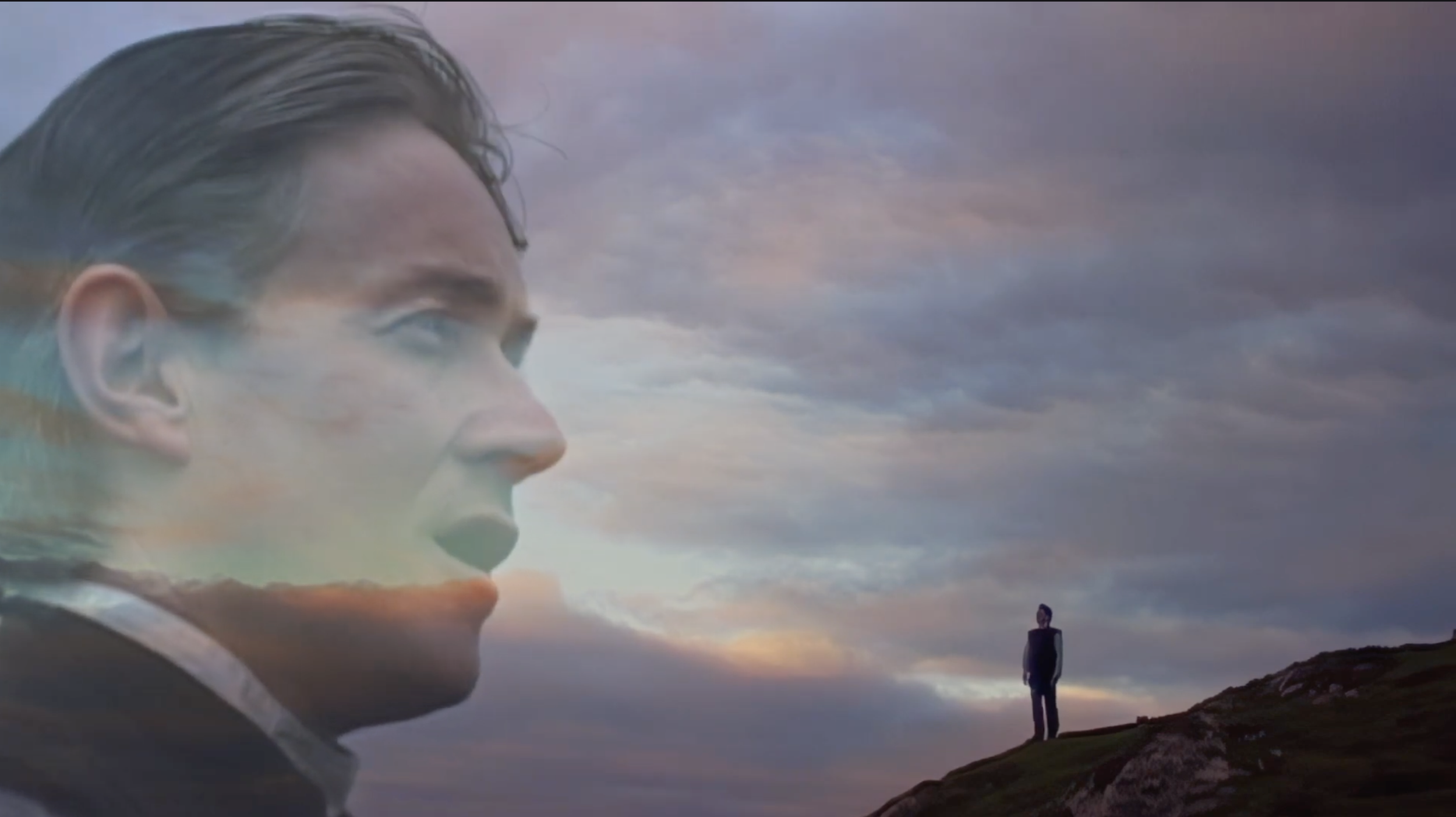
Igitur Servus
Medieval Irish arranged Michael McGlynn
An Oíche
Text Traditional, Music by Michael McGlynn
Ríu Ríu
16th Century Spain, arr. Michael McGlynn
Incantations
Words and Music by Michael McGlynn
When the War is Over
Text Francis Ledwidge, Music by Michael McGlynn
I Dreamt I Dwelt in Marble Halls
Michael Balfe/Alfred Bunn arranged Michael McGlynn
Armaque cum Scuto
Music by Michael McGlynn
Miserere Miseris
Medieval Irish arranged Michael McGlynn
Cynara
Text Ernest Dowson, Music by Michael McGlynn
Buachaill Ón Éirne
Trad arranged Michael & John McGlynn
Fuigfidh Mise’n Baile Seo
Text Traditional, Music by Michael McGlynn
Victimae
Music by Michael McGlynn
Christus Resurgens
Medieval Irish arranged Michael McGlynn
Pie Jesu
Music by Michael McGlynn
Ocean
Text Traditional, Music by Michael McGlynn
Deep Dead Blue and Behind the Closed Eye were part of a record licensing deal I signed with the British label Gimell in 1998. Gimell was, at the time part of Philips/Polygram - and had one of the highest reputations for pristine and artistic releases in the world. For me, the approach from Steve Smith of Gimell was a huge thing. His recordings with The Tallis Scholars throughout the 80s and into the 90s were technically innovative and showed that choral music could be captured with clarity and honesty, without losing the sense of real voices in a real space, and remain relevant to the music industry. This was exactly the way of working that was very close to what Brian Masterson and I had been trying to do with Anúna over the seven years previously.
The first release was planned to coincide with ANÚNA’s appearance at the BBC Proms in the Royal Albert Hall in 1999. That performance remains one of the highlights of my career. I flew over to London to meet Nicholas Kenyon, controller of BBC Radio 3 and the BBC executive responsible for the artistic direction of the 1999 BBC Proms. We discussed how this performance would work as it was the first officially labelled Irish Prom. He was very clear about why he was asking ANÚNA. He saw it as a definitive and unique cultural expression of Ireland, and that was what was needed for such a culturally important event. The irony was that the Prom itself fell under the radar in Ireland mainly because ANÚNA itself was outside the classical infrastructure at home. However, this fulfilled something I had carried within me as a dream since I was a teenager in the 1980s when I travelled to London, paid my pound, and sat high in the gallery simply to be present in that Hall, never suspecting that one day my ensemble would be on that stage singing my own compositions to a packed and attentive audience.
Then suddenly all of this ended. Polygram was sold to Seagram/Universal and Gimell were no longer part of their equation. Deep Dead Blue vanished and Behind the Closed Eye was never released on the label. That dream ended.
Cynara was created during this time. I was exhausted, disillusioned, and increasingly isolated. As a composer I had almost stopped writing music entirely. Up to this point I had managed the technical limitations of the ensemble by placing difficult to sing lines in the solo parts with the choral textures in a supporting role. Despite the presence of some very high quality soloists in ANÚNA, the ensemble was only capable of working within a limited range. With Cynara I pushed the ensemble to develop. Many of the singers found this difficult technically as they had entered the group expecting simple structures, amplified concerts and repertoire that did not involve too much effort. Cynara demanded work and virtuosity, and the limits of training and infrastructure became exposed in the process. That strain runs through the recordings and, to me at least, adds tension and energy to many of the songs and they achieved some extraordinary things on this recording.
The sessions were brutal. I remember coming home and telling Lucy I was afraid this would kill me. The only place in Ireland where something like Anúna existed was inside Anúna itself so there was nowhere for the singers to develop in a way that was sympathetic to what we were attempting. In my experience the Arts infrastructures related to singing then and now do not adequately develop singers, favouring instead the support of entities that are not realistically connected to the needs of the community they should serve. With no system of training outside of ANÚNA and no infrastructure supporting us every effort to create involved monumental effort of discipline and work, and many in the group at that time had not signed up for it. This probably explains why it was six years before I made another original album after Cynara.
At the same time, the existence of ANÚNA, and of the work I was writing was being quietly dismissed or ignored by those who probably had most to benefit from engaging with it. Singers working in other choirs reported blunt comments about the attitudes they encountered - that ANÚNA was merely attractive presentation, dressing up singers and commercialising a so-called “Celtic” identity. That persisted for many decades after, and has abated somewhat today where a simple click on a link can give you access to our work. Then it was based on lack of knowledge and, dare I say, a hint of jealousy. However, the strain of that disconnection sits within this record now I listen to it again after many years.
I must have been in a very dark place when I made Cynara. The texts are filled with distress, conflict, and unease. I didn’t recognise any structure at the time. I gather texts the way a magpie gathers fragments, letting them sit together interacting until the shape of the music forms. There was no conscious architecture in this record. Several of the pieces are designed to allow the listener to move through difficult material without forcing everything into the open at once. You could call them “fillers” - “Ríu Ríu”, “I Dreamt I Dwelt in Marble Halls” - but they allow the more complex pieces to be accessed. Cynara moves from spiritual conflict and nostalgic memory through war, entrapment to moral corruption. But slowly it resolves outward toward fragility, mercy and eventually back to where my music most feels at home, the natural world.
"When the War is Over" was commissioned by the Cork Choral Festival in 1999 and I spent a great deal of time on it because I wanted to do justice to Francis Ledwidge’s text seeing this as an extension of my work on Behind the Closed Eye. I adapted his poem "The Place," written before he left for a war from which he never came home. At the time some criticisms mentioned the “accessibility” of the piece. Personally I have little time for music that consciously excludes audiences, considering my listening gravitates towards Ligeti rather than Stanford, I don’t see atonality as a barrier to audiences being able to access a piece of music. The ability to take complex ideas and make them resonate with a general audience has always been my aspiration. This song is one of the most difficult choral pieces I know and has strained professional choirs across the world to interpret. It sits just right on this disc, and remains a favourite of each generation of ANÚNA that followed.
At the centre of the album sits the title track, “Cynara”. Shining, rich, tempestuous and beautiful, but like Blake’s Rose, at the centre of it lies darkness and corruption.
I had loved Ernest Dowson’s (1867-1900) poem for many years before I understood the reality behind it. I first encountered “Cynara” through the setting by Frederick Delius, lush, beautiful, and distant, the solo voice absorbed into the orchestral texture rather than placed clearly in front of the listener. That sound shaped my own response to the text. When we mixed this recording, I asked Brian to position my voice much further back than would normally be comfortable for the listener, so that it would sit inside the texture in the same way, lost and surrounded. I wanted the listener to search for the line and to hear the words gradually, not to receive them immediately. And, ideally, to read them.
The poem is set in a hedonistic interior world. The speaker lies in bed with a woman, a prostitute, moving through intimacy, frenzy, exhaustion. And yet he returns again and again to the memory of Cynara - “I have been faithful to thee, Cynara! in my fashion.” You can hear it at the bottom of this page.
The key to the poem lies in what it refuses to name. Dowson was twenty-two when he met Adelaide Foltinowicz, an eleven year old waitress and he became obsessed with her. While we can view this work as great literature, it is horrific in its implications. This is, in some ways, the most beautiful and the ugliest piece I have composed. In Ireland we were at the height of the Celtic Tiger being reshaped, becoming more confident with a growing sense of cultural renewal that came alongside a massive increase in wealth. At the same time hidden secrets were beginning to surface: the systematic abuse of children within church and state institutions, and the long, quiet acceptance that had allowed this to continue, the same acceptance by the society that casually ignored the implications of “Cynara” at the time of its writing. Society was being forced to confront itself. Some artists chose open denunciation, such as Sinéad Ó Connor, I chose a quieter way and it was probably too subtle.
From that centre the record moves onwards. "Fuigfidh Mise'n Baile Seo" sets a traditional Irish text about a woman trapped in a marriage because she wanted money. She is controlled, denied Mass on Sunday. The piece is bitter, angry and distressing and forms a balance with “Cynara” itself in that the setting, while beautiful and energetic, holds at its harmonic core disquiet and darkness.
"Pie Jesu" I wrote in a single flash of inspiration in memory of those who died in the Troubles. I wanted something accessible and simple and chose Monica Donlon to sing the virtuosic descant, producing one of the most unexpected and beautiful moments on any ANÚNA recording. Over forty years I have had conversations with people who tell me that "Pie Jesu" is one of those pieces that has become part of their lives in their most intimate moments of grief and despair. Sometimes this is the most wonderful job that there is and other times I am just grateful to be able to make things that have meaning.
"Ocean" closes the record, blending early Irish texts from the 6th to the 8th century, great waves, flood, cold wind on blue water, the dark soul of the cool sea. It is the only fully landscape-centred piece on the album and it returns to the elemental world that was present at the very beginning of Anúna and remains today with me.
Looking back now, Cynara marks the end of a continuous period of creation that had begun in the early 1990s. This was my seventh original recording in a decade made outside every structure that Irish musical and artistic life had on offer. If I adhered to its rules and restrictions. Cynara vanished after a couple of startlingly perceptive reviews by non-Classical critics which gave me hope. What followed was a long stretch without new compositions. I couldn’t find that place where the music came from for a very long time. The next original album was Sensation in 2006, and it is the coldest record I have ever made. But that is another story.
Igitur Servus
A 14th Century Irish chant.
An Oíche
An cuimhin leat an oíche úd a bhí tú ag an bhfuinneog,
Gan hata gan láimhne dod dhíon gan chasóg?
Do shín mé mo lámh chughat. ’s do rug tú uirthi barróg,
Gan hata gan láimhne dod dhíon gan chasóg? Gus labhair an fhuiseog.
A chumainn mo chroí tar oíche ghar éigin.
An cuimhin leat an oíche úd ’san oíche ag cur cuisne.
Do you remember that night when you were at the window,
Without a hat, without gloves, without a coat over you?
I stretched out my hand to you, and you took it in an embrace,
Without a hat, without gloves, without a coat over you? And the lark spoke.
O love of my heart, come to me some cold night.
Do you remember that night, and the night casting chill?
Dedicated to Big Philip
Ríu Ríu
Possibly written by Mateo Flecha the Elder from the “Villancicos de Diversos Autores” 1556
Soloist Andrew Redmond
Ríu, ríu, chíu, la guarda ribera:
Dios guardó el lobo de nuestra cordera.
El lobo rabioso quiso morder,
mas Dios poderoso la supo defender;
quísola hazer que no pudiesse pecar,
ni aun original esta Virgen no tuviera.
Este qu’es nascido es el gran monarca,
Christo patriarca de carne vestido;
hanos redimido con se hazer chiquito,
aunqu’era infinito, finito se hiziera.
The shepherd by the river:
God protect our sheep from the wolf
The raging wolf tried to bite her,
but God Almighty looked after her well.
He created Her without sin,
a virgin that was untouched by the fault of her father.
This new-born child is a great king,
Christ the Father made flesh;
He saved us by making himself into a tiny child,
He was forever, and is now finite.
Incantations
From The Celtic Mass by Michael McGlynn
‘S Tusa an dámh, ‘s Tusa an éan, ‘s Tusa an t-iasc, aililú.
‘S Tusa an ghaoth, ‘s Tusa an fuacht, ‘s Tusa an mhuir, aililú.
‘S Tusa an ghrian, ‘s Tusa an réalt, ‘s Tusa an spéir, aililú.
Aililú mo Íosa, aililú mo chroí, aililú mo Thiarna, aililú mo Chríost.
You are the stag, You are the bird, You are the fish, alleluia
You are the wind, You are the cold, You are the sea, alleluia
You are the sun, You are the star, You are the sky, alleluia
Alleluia my Jesus, alleluia my heart, alleluia my Lord, alleluia my Christ.
When the War is Over
Adapted from “The Place” by Francis Ledwidge [1887-1917].
Soloist Monica Donlon
…When the war is over I shall take
My lute a-down to it and sing again
Songs of the whispering things amongst the brake,
And those I love shall know them by their strain.
Their airs shall be the blackbird’s twilight song,
But it is lonely now in winter long,
And, God! to hear the blackbird sing once more.
When the war is over and April rainbows win a blackbird’s song.
I Dreamt that I Dwelt in Marble Halls
Written by Michael Balfe [1808–1870] with text by Alfred Bunn [1790–1860]. This arrangement is by Michael McGlynn. The original title of the piece is “The Dream” and it comes from the opera “The Bohemian Girl”.
Soloist Joanna Fagan
I dreamt that I dwelt in marble halls, with vassals and serfs at my side,
And of all who assembled within those walls that I was the hope and the pride,
I had riches too great to count, could boast of a high ancestral name;
But I also dreamt, which pleas’d me most, that you lov’d me still the same.
I dreamt that suitors sought my hand, that knights upon bended knee,
And with vows no maiden heart could withstand, they pledg’d their faith to me,
And I dreamt that one of that noble host came forth my hand to claim;
But I also dreamt, which charm’d me most, that you lov’d me still the same.
Armaque cum Scuto
Text is by Sedulius Scottus, the famed 9th Century Irish writer.
Armaque cum scuto prendens hunc Christe iuvato
Pax fido populo, regi sit gloria summo
Ac nostram secum naturam vexit eodem.
Arm yourself, O Christ, and be of help to him.
Peace to those of good faith, and glory to the greatest King.
Carry our essence to Him.
Miserere
14th Century Irish, from “The Dublin Troper”
Soloists Kim Lynch, Michael McGlynn, Lucy Champion
Miserere miseris fons misericordie
Si misera fueris parit aula glorie,
honor nostri generis, archa novi federis, et aurora gracie.
Have mercy on the suffering, fount of mercy.
You bore the glorious prince in your great mercy.
Greatest of our race, the new ark of the covenant, and the dawn of grace.
Cynara
Text by Ernest Dowson [1867–1900]
Soloist Michael McGlynn
Last night, ah, yesternight, betwixt her lips and mine
There fell thy shadow, Cynara! thy breath was shed
Upon my soul between the kisses and the wine;
And I was desolate and sick of an old passion,
Yea, I was desolate and bowed my head:
I have been faithful to thee, Cynara! in my fashion.
All night upon mine heart I felt her warm heart beat,
Night-long within mine arms in love and sleep she lay;
Surely the kisses of her bought red mouth were sweet;
But I was desolate and sick of an old passion,
When I awoke and found the dawn was grey:
I have been faithful to thee, Cynara! in my fashion.
I have forgot much, Cynara! gone with the wind,
Flung roses, roses riotously with the throng,
Dancing, to put thy pale, lost lilies out of my mind;
But I was desolate and sick of an old passion,
Yea, all the time because the dance was long:
I have been faithful to thee, Cynara! in my fashion.
I cried for madder music and for stronger wine,
But when the feast is finished and the lamps expire,
Then falls thy shadow, Cynara! the night is thine;
And I was desolate and sick of an old passion,
Yea, hungry for the lips of my desire:
I have been faithful to thee, Cynara! in my fashion.
Buachaill ón Éirne
Soloist John McGlynn
Buachaill ón Éirne mé‘s bhréagfainn féin cailín deas óg,
Ní iarrfainn bó spré léi tá mé féin saibhir go leor,
‘S liom Corcaigh ‘á mhéid é dhá taobh an ghleanna ‘s Tír Eoghain,
‘S mura n-athraí mé béasa ‘smé‘n t-oidhr’ ar Chontae Mhaigh Eo.
Rachaidh mé ‘márach a dhéanamh leanna fán choill,
Gan choite, gan bhád, gan gráinnín brach’ ar bith liom,
Ach duiliúr na gcraobh mar éide leap’ os mo chionn,
‘S óró sheacht m'anam déag thú’s tú féachaint orm anall.
Buachailleacht bó mo leo nár chleacht mise riamh,
Ach ag imirt ‘s ag ól ‘s le hógmhná deasa ón sliabh;
Má chaill mé mo stór ní móide gur chaill mé mo chiall,
Is ní mó liom do phóg ná ‘n bhróg ‘táim a caitheamh le bliain
A chuisle ‘s a stór ná pós an seanduine liath,
Ach pós an fear óg, mo leo, mura maire sé ach bliain,
Nó beidh tú go fóill gan ó nó mac os do chionn
A shilfeadh aon deoir tráthnona nó ‘r maidin go trom.
A boy from the Erne am I, and I would beguile a fine young girl,
I would not ask a dowry of cows with her, I am rich enough myself,
Cork is mine, as far as it goes, on both sides of the glen, and Tyrone,
And unless I change my ways, I am the heir of County Mayo.
I will go tomorrow to brew ale through the wood,
Without currach, without boat, without a grain of malt with me at all,
But the foliage of the branches as a bed-cover above me,
And oh, you are my seventeen souls, as you look across at me.
The herding of cows, my love, I never practised,
But playing and drinking, and with fine young women from the mountain;
If I lost my treasure, it is not certain I lost my sense,
And your kiss is no more to me than the shoe I have worn for a year.
O pulse and treasure, do not marry the grey old man,
But marry the young man, my love, even if he were to live only a year,
Or you will still be without grandson or son over you
Who would shed any tear in the evening or in the heavy morning.
Fuígfidh mis’ an Baile seo
Fuígfidh mis’an baile seo mar tá sé dubh gránna,
‘Gus rachaidh mé go Connachta nó siar go Laighin Uí Eára,
An áit a bhfaighidh mé póg ó mo stór is míle fáilte
Sealbhán deas bó ‘gus cead mo phósadh ar a’ táilliúir.
‘Mhuire, nach mé ’n trua[ighe] ‘s mé pósta ar a’ sclábhaí,
Nach ligeann amach chun Aifrinn mé lá saoire nó Dé Domhnaigh,
Nach dtéann go tígh a’ leanna liom ‘s nach n-ólfadh gine óir liom,
‘S nach dteannfadh lena chroí mé mar ‘dhéanfadh an buachaill óg liom.
Pósadh go hóg mé mar gheall ar na puntaí,
Lán mo dhá láimh is níor shásaigh sé riamh m’intinn;
Nach trua nach dtig an reacht ‘mach mar ‘tá ar bha ‘s ar chaoirigh,
An té nach dtaitneodh ‘mhargadh leis a sheoladh ar ais ‘un aonaigh.
I will leave this town, because it is black and ugly,
And I will go to Connacht or west to the Leinster of the O’Haras,
A place where I will get a kiss from my treasure and a thousand welcomes,
A fine possession of cows and permission for me to be married to the tailor.
O Mary, am I not the pity, and I married to the slave-driver,
Who does not let me out to Mass on a feast day or a Sunday,
Who does not go to the ale-house with me and would not drink a golden guinea with me,
And who would not draw me to his heart as the young boy would do with me.
I was married young because of the pounds,
My two hands were full and it never satisfied my mind;
What a pity that the decree does not come out as it does for cows and sheep,
That the one to whom the bargain would not please be sent back again to the fair.
Victimae
Text from the 14th Century Irish manuscript of “The Dublin Play”.
Soloist Michael McGlynn
Victimae paschali laudes immolant Cristiani. Laudes.
Agnus Dei.
Let all Christians offer praise to the Paschal victim. Lamb of God.
Christus Resurgens
A chant written c.1150 from an Irish manuscript.
Christus resurgens ex mortuis, jam non moritur, alleluia
Mors illi ultra non dominabitur alleluia
Christ has arisen from the dead and dies no more, alleluia.
Death will no longer have dominion over Him, alleluia.
Pie Jesu
Soloist Monica Donlon
Pie Jesu, Domine: Dona eis requiem: Dona eis requiem sempiternam
Merciful Jesus, Master: Grant them rest: Grant them everlasting rest.
Dedicated to the memory of Jonathan McCullough and those who died in the Troubles
Ocean
A blend of early Irish texts dating from the 6th to the 8th Century.
Soloist Monica Donlon, Joanna Fagan
Great wave of flood, wave of blue ocean aithbi áin
Great wave of flood, ebb of cool ocean aithbi áin
Fégaid úaibh sair fo thuaid…
Look outward from you, east and north…
Great wave upon the ocean bound for a distant shore.
Cold wind upon blue water restless forever more.
Great Spirit of dark water, soul of the cool blue sea.
Song of the ancient ocean, endless and ever free.
Produced by Michael McGlynn and Brian Masterson.
All tracks recorded and mastered by Brian Masterson on location in 1999 except Christus Resurgens, recorded in Windmill Lane Studios in 1998. Assisted by Kieran Lynch and Poppy Masterson.
John McGlynn – Guitar
Denise Kelly – Concert harp
Bernard Reilly, Paul Maher – Percussion
Michael d’Arcy – Violin
ANÚNA
Artistic Director
Michael McGlynn
John McGlynn
Lucy Champion
Monica Donlon
Miriam Blennerhassett
Derek O Gorman
Ian Curran
Garrath Patterson
Sarah O Kennedy
Simon Morgan
Kim Lynch
Kira Deegan
Joanna Fagan
Andrew Redmond
Stephen Kenny
Efan Williams
Paul Byrne
Stephen Fennelly
Brian Jordan
Sinead McGoldrick
Roisín Dempsey
Roisín O Reilly
Clodagh Reid
Julie Feeney
Emer Lang
Audrey Phelan
Jacqui Mahon
Edel Harrington
Alice McKeown
Derína Johnson
Thérèse McCartin
Niamh O Brien
Maeve Morris
Cathal Clinch
Nichola Horn
Barry Finn
Mark O Sullivan
Jeffrey Ledwidge
Eunan McDonald
Karen McDonnell
Meav Ní Mhaolchatha
Cathal Ó Madagáin
Ciarán Brady
“When the War is Over” was commissioned by the Cork Choral Festival, 1999.