
Sensation (2006)
Released Danú 023 (2006)
Available HERE and on all streaming services
O Ignis Spiritus
Brezairola
Sensation
Silver River
Shining Water
Lux Aeterna
The Road of Passage
Whispers of Paradise
Maid in the Moor Lay
Tenebrae IV
O Maria
Gilles Servat appears courtesy of Label Productions.
Produced by Michael McGlynn and Brian Masterson
Engineered by Brian Masterson Assisted by Maria Fitzgerald
Gilles Servat recorded and engineered by Jean-Michel Bocéno and appears courtesy of Label Productions.
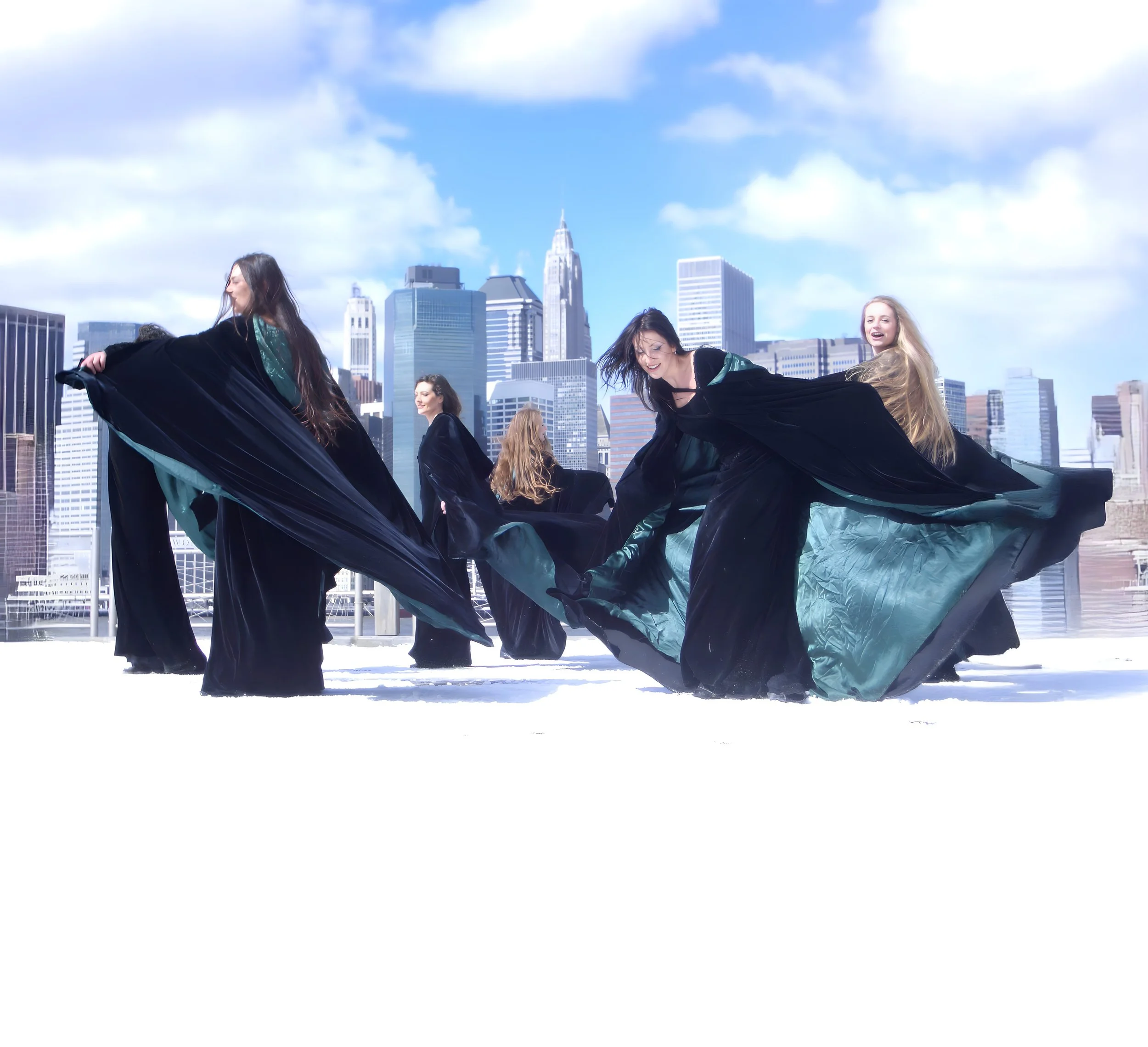
Cover images John McGlynn
Cynara in 2000 marked the end of a decade that had ranged from extreme visibility to very empty and sometimes dark patches. The Riverdance wave was surfed and now that was done and dusted. Post Riverdance there was the possibility of my music entering the mainstream Classical music environment, as I had intended it to through the Gimell / Philips album deal signed in 1998, but that had failed. With Cynara, I hit a brick wall. That is the simplest way to put it.
Recording albums has never been about promoting ANÚNA or anything, being truly honest. It has been a series of internal goals I have set for myself. The first seven records documented material that had been composed right back into the early 1980s, ideas and sketches that had occupied me since my childhood. By the time Cynara was finished, all that material had been examined and some of it recorded. The original “archive” was exhausted. That is why there was a six-year gap before the next studio album, Sensation. I had nothing to say.
Between 2000 and 2006 I was not idle, but I was not moving forward in the same way. I re-recorded the first Anúna album and later Invocation, largely for contractual reasons. I compiled the originals together after a light remaster and issued them as Relics in 2003. The 2002 re-recording of Anúna added little fresh material beyond a small number of pieces connected with The Work of Angels, a stunning documentary about the Book of Kells made by the iconic film director Louis Lentin. “The Dawn”, “Hymn to the Virgin” and “Kells” all formed part of that soundtrack and were fine additions to the album, initially titled ANÚNA 2002. The revised Invocation included new works such as The Wild Song, written for the Finnish vocal group Rajaton, and a very spectacular version of “My Lagan Love” with a very high tenor solo.
One album from this period did achieve external success. Winter Songs was released in 2002, a compilation with a small number of new songs also recorded in these 2002 sessions. For the United States Winter Songs became Christmas Songs and was issued on Koch Records (KOC-CD-9554). It includes new arrangements of classics such as “Silent Night” and “Noël Nouvelet”, alongside originals like “Christmas Day is Come” and was reviewed favourably in The New York Times. Around the same time Essential Anúna was released in the UK and Ireland on Universal Classics & Jazz (064 772-2), peaking at number 6 on the Official Classical Artist Albums Chart in 2003, with a US edition following on Koch Records (KOC-CD-9555). These releases kept things going and me occupied, but they did not answer the larger question of what should come next.
Sensation was the first album that did not draw from childhood material or a contractual necessity. To understand where it came from, it is necessary to look at my own life at the time. I married Lucy Champion in 2000. Three years later Aisling was born, followed by Lauren in 2006. Those were seismic changes. Perspective shifted. Focus shifted. For a few years I was able to step back from being a composer and become a father. Sensation grew out of seeing the world through the eyes of Aisling. When you become a parent you are not only in the presence of a life you have created, you are returned to experiences long forgotten in your own life. First encounters with the sea. First encounters with poetry. With music. All of that was in my mind before I began writing.
At the same time Anúna was in a difficult position. I met the Arts Council of Ireland repeatedly during this period (and many times since). I pointed out to them that structural change was needed in the way choral music was viewed and administered at home. There was, and remains, no national unified choral policy, no “joined up” thinking. In practice the Council has concentrated full support on one vocal ensemble, and allocate an inadequate allowance to the rest of the community. Something like ANÚNA, with its innovative structure, international cultural positioning, composer-driven ethos and raw originality, has no avenue for support within our Arts infrastructure. By 2006 I had come to accept that our time was finite in Ireland. We would either survive on our own or I would let the group fade away.
In Irish choral culture the dominant model has been competitive as long as I have been part of it, with a few exceptions: schools competing against schools, excellence measured through winning. Choral music develops the individual across a lifetime. Research points to cognitive and physical benefits. Yet public funding for sport far exceeds that for choral music by multiples. The fragmented nature of the community means there is no unity of purpose, no ability to lobby or demand change.
In 2006 teachers and conductors were working hard, often achieving phenomenally high standards, but frequently within a competition-driven system. When students left school or university there was no structured progression. I have discussed this issue with Irish conductors for four decades. Their disappointment is heartbreaking and many of them have created adult ensembles, unsupported and unacknowledged simply to give their students an opportunity to continue to sing in a choir. For this reason I used the promotional opportunities offered on the release of Sensation to have two articles published that dealt with this subject rather than do the usual promotional articles on the album. They appeared in the Irish Times and the Journal of Music in Ireland (note - The National Chamber Choir are now known as Chamber Choir Ireland and The Association of Irish Choirs is now Sing Ireland).
When young Irish singers hit ANÚNA they often arrived with minimal choral experience that was compatible with our methodology. I suppose this was what gave rise to the beginning of the ANÚNA Education programme that Lucy and I founded a few years later. Our Irish summer schools were hugely popular with academics, composers, conductors and singers travelling from all over the world, but ultimately we had to move them away from home to the Netherland and more recently to Italy simply because Irish choirs and conductors were not attending them. There is no one to blame for that. We just lost relevance to their needs.
In 2006 many new singers arrived with an incorrect perception of ANÚNA. The prevailing attitude was that the group was about staging, costumes, candles and a commercial Celtic aesthetic. Word of mouth was often dismissive. What was known was that ANÚNA offered international travel, professional opportunity and recording experience unavailable to any other Irish performing group. But some who joined had to be convinced that the music had any value simply because I was not seen as a composer at home, and the choirs that they were involved in just didn’t perform my music. Long-term members repeatedly had to reorient newcomers to the working method and to the nature of the repertoire. The first point of entry should have been the music, but very often was simply the opportunities we offered.
Many grew to love ANÚNA and the music. But the process was exhausting. We were not a school. For some Irish singers who joined us around this time, ANÚNA was seen as a stepping stone to accessing the hugely successful “Celtic” shows that had sprung up at the time. A finishing school in many respects. Dealing with this was difficult, but it did have a very positive effect in that it forced the rest of us to define what ANÚNA actually is, a journey that took a full decade.
New faces began to emerge in the ensemble - US academic Ian Russell joined bringing a degree of aesthetic analysis of our work that had been absent previously. This period also brought in long-term member Rory Musgrave, who still sings with us when his touring schedule allows. Also joining was a very young Lynn Hilary whose voice can be heard in solo roles on many of our albums since then. Kim Lynch brought a purity of tone to these albums particularly her virtuosic performances on “The Rising of the Sun” and “The Dawn”. Charlotte Richardson, an opera student from England, brought a steady and powerful soprano voice that colours pieces such as “O Maria”. There was a pattern. Many of the newer singers were not from Ireland originally and many of them had a strong operatic bias. I was beginning to understand that there were strong connections between the kind of training and disciplines that these singers brought and the original intent of An Uaithne. Autonomous singers who were proactive and strongly engaged with self and how they relate to the community..
As with Behind the Closed Eye in 1997, the music on Sensation consists entirely of original compositions drawn from varied sources. O Ignis Spiritus, a setting of Hildegard von Bingen (1098–1179), opens the record. It features Miriam Blennerhassett and Monica Donlon and was commissioned by the National Concert Hall. I chose it deliberately as the opening track as it announces purpose, similar in some ways to the opening track on Cynara “Igitur Servus”. This was something different, something complex and multi-layered. Kenneth Edge’s blazing saxophone is emotive and purposeful. It is a banger.
“Brezairola” evokes the work of Joseph Canteloube (1879–1957) and his Songs of the Auvergne - a cool and angular piece with two very strange solo lines that seem to purposefully push this piece into uncomfortable places, with an unfeasibly sustained high A in the tenor line. The title track, “Sensation”, centres on a recitation by Breton folk legend Gilles Servat of a poem by Arthur Rimbaud (1854–1891) over impressionistic vocal textures. The poem was one of the first pieces I set as a young composer for piano and voice, and I was deeply flattered when Gilles pointed out that this collaboration had pushed him to go back to Rimbaud and explore his startling poetry. What is there to say about this? Listen and make your own mind up about it. The recording at the bottom of this article is the remastered version from the 2025 release Tochairm.
“Lux Aeterna” was written in a single day and begins with a luminous solo by Sharon Carty which leads into “The Road of Passage”. Originally these formed one piece and were later retitled Transcendence and combined. “The Road of Passage” sets text by John Henry Newman (1801–1890) and was commissioned by the UCD Choral Scholars under Desmond Earley for the 150th anniversary of University College Dublin. Lynn Hilary features as soloist.
Whispers of Paradise reflects an influence from David Sylvian. Noel Eccles adds vibraphone on this and the atmospheric “Silver River”. “Maid in the Moor Lay” is a brief setting of an incomplete medieval lyric. “Tenebrae IV” precedes “O Maria”, which closes the album.
“O Maria” began as a work written for a college vocal ensemble called “The Hound’s Cry”. In that piece the harmonic structure was obscured by saxophone, strings and layered rhythmic ideas. When I returned to it and played the central chords on their own, the entire work “O Maria” appeared very quickly.
The text centres on Mary at the foot of the cross. The reference to the sword piercing her heart is central to the piece. Christ is pierced by the sword, but it passes through her heart. She becomes every mother. The grief is not symbolic. It is physical and sustained. Religious writing often describes that grief as something held silently within her, and that sense lies at the centre of the piece.
What distinguishes the work structurally is the closing section, an extended sequence of repeating chords that overlap and expand. The idea of repetition moving forward without obvious resolution is something I have returned to many times since. When I played the finished album to Noel Eccles he remarked on the length of the final track. I wondered if it might be too long. His response was that it might even be longer. Listeners seemed to understand the piece without it needing explanation.
The album was primarily recorded in St Patrick’s Church, Dalkey during a cold spell in Dublin. Máire and Andreja played beautifully despite what must have been crippling conditions. Noel produced a stunning array of sounds on this album, including bowed vibraphone on “Silver River” that adds an uncanny feeling to the song, and remains one of the most gifted musicians that this country has ever produced.
During this period ANÚNA began the long process of defining itself, growing slowly in confidence and Sensation was a transformative recording for all of us. Things had begun to shift, and they shifted quietly at first. The internet became faster. My sheet music website, which I had set up a couple of years earlier, was among the first of its kind. For the first time my music began to circulate independently of Anúna, particularly in America. This led to a greater awareness of the diversity of our output, opening up new audiences and opportunities.
Then something happened that would change our trajectory yet again. My brother John was performing at a corporate engagement with ANÚNA in 2006 and sang for the sister of a certain Denny Young. That chance encounter led to a 39-day tour of the United States in 2007 and two albums, Anúna: Celtic Origins and Christmas Memories. These releases were made up of rerecorded versions of some of our best known work, and introduced us to an entirely new audience. Two successful PBS specials followed. Celtic Origins became the biggest selling World Music album in the United States in the summer of 2007. Christmas Memories entered the Billboard 200 at number 95 and reached number 6 on the Billboard World Music chart. The single “Ding Dong Merrily on High” reached number 26 on the Billboard Hot Adult Contemporary Tracks chart. Everything was made possible by Denny and his company Elevation, whose faith in what we were doing meant a great deal to me then and still does. I also have to mention Rory Johnson who was closely associated with our work at that time. His humour, his experience and his steadiness were invaluable. He was also responsible for introducing me to the brilliant Finnish violinist Linda Lampenius who subsequently collaborated with us on the Celtic Origins special and beyond. Sensation became somewhat lost in all the excitement but remains an essential part of our history and contains some truly wonderful performances and challenging music.
O Ignis Spiritus
Text written by Hildegard von Bingen [1098 – 1179].
O ignis spiritus paracliti,
vita vite omnis creature,
Sanctus es vivificando formas
Sanctus es unguendo periculose fractos:
Sanctus es tergendo fetida vulnera.
O spiraculum sanctitatis,
O ignis caritatis,
O fons purissimus,
O iter fortissimum.
O fire of the Spirit, the Paraclete,
the life of the life of every creature.
Holy are you, giving life to forms.
Holy are you, anointing those perilously broken.
Holy are you, cleansing foul wounds.
O breath of holiness.
O fire of love.
O most pure fountain.
O strongest path.
Solos: Miriam Blennerhassett & Monica Donlon
Brezairola
A traditional lullaby text from the Auvergne region of south central France. Written in Occitan (Provençal) in a phonetic or song-transmission spelling rather than standard orthography.
Lou soun, soun, bouol pas
béni, béni, doun, béni, d'èn docon.
L'èfontou bouol pas durmi.
Sleep, sleep will not come.
Hush now, hush, come now, hush, little one.
The child does not want to sleep.
Solo: Michael McGlynn Descant: Aideen Rickard
Sensation
Poem by Arthur Rimbaud [1854–1891], written in March 1870.
Par les soirs bleus d'été, j'irai dans les sentiers,
Picoté par les blés, fouler l'herbe menue,
Rêveur, j'en sentirai la fraîcheur à mes pieds.
Je laisserai le vent baigner ma tête nue.
Je ne parlerai pas, je ne penserai rien:
Mais l'amour infini me montera dans l'âme,
Et j'irai loin, bien loin, comme un bohémien,
Par la nature, heureux comme avec une femme.
On blue summer evenings I will go along the paths,
pricked by the wheat, treading the fine grass.
Dreaming, I will feel its coolness on my feet.
I will let the wind bathe my bare head.
I will not speak. I will think of nothing.
But boundless love will rise within my soul,
and I will go far away, very far, like a wanderer,
through the fields of nature, happy as if with a woman.
Narrated by Gilles Servat
Silver River
Saxophone: Kenneth Edge Vibraphone & bowed vibraphone: Noel Eccles
Commissioned by Matthew Manning
Shining Water
Shining water, silent daughter, face turn from the sun
Guiding light through silver night, your songs blend into one.
Crystal morning dew is forming falling through the trees.
Deep inside your simple guidance whispers on the breeze
Radiant fire on distant mountains guide your voice to me
Patterns of eternal light that set my spirit free.
Dreams of ancient silent forests visions of the past
Fill my thoughts, caress my mind and call for me at last
Silent daughter, shining waters turn against the sun
Golden flight from silver night the songs blend into one
As the evening mists are forming falling through the trees
Fill my thoughts, caress my mind I hear you call to me
Danú Dé… Danú Goddess
Solo: Lucy Champion
Lux Aeterna
Lux aeterna luceat eis Et lux perpetua luceat eis.
Let eternal light shine upon them And let light perpetual shine upon them.
Solo: Sharon Carty
The Road of Passage
John Henry Newman [1801 – 1890], the founder of what is now University College Dublin, wrote this text in 1852.
I am turning my eyes towards a hundred years to come And I dimly see the island I am gazing on Become the road of passage and union between the two hemispheres, And the centre of the world.
Solo: Lynn Hilary
Whispers of Paradise
Gentle breeze scatters embers on moonlit water,
Waking the cool breath of night.
Silent stars, shining down from eternal darkness
Frozen reflections of light
Golden sun rising out of a pale blue morning
Carries the summer along
Distant cries as seagulls dance in unending pattern
Echoes rejoice with their song
And for one moment in time I hear a whisper of paradise
And for one moment in time I hear a whisper of paradise
Solo: Michael McGlynn
Maid in the Moor Lay
This text comes from medieval England.
Maid in the moor lay seven nihtes full Wel was hir meat The primerole and the violet Wel was hir drink The colde water and the welle spring Wel was hir boor The rede rose ant the lily floor. Maid in the moor lay seven nihtes full
A maiden lay in the moor for seven full nights Her food was good, the primrose and the violet* Her drink was good, the cold water and the spring well Her bed was good, the red rose and the lily's flower A maiden lay in the moor for seven full nights
*edible flowers
Solo vocals: Aideen Rickard, Alice Gildea, Sharon Carty, Lucy Champion
Tenebrae IV
This Irish poem dates from the 11th century, the Latin one from the 4th.
Ná len ná len in domun cé ná car ná car sel bec a ré
Baí sunn indé ba gel a gné ní fil indiu acht 'na chrú fó chré
O vos omnes qui transitis per viam…
Do not cling, do not cling to the world. Do not love it. Its time is brief.
He was here yesterday. His face was bright.Today he is nothing but blood beneath the earth.
All of you who pass by along the way…
Solo: Aengus Ó Maoláin
O Maria
"Ecce mater, filius. Est consummatum"
Et sic transit gladius.
O Maria virgo pia plena dei gracia.
“Behold your mother, son. It is finished.”
“And so the sword passes through.”
“O Mary, devout Virgin, full of the grace of God.”
ANÚNA
Artistic Director
Michael McGlynn
John McGlynn
Ian Curran
Toby Gilbert
Patrick Hughes
Vincent Lynch
Brian Merriman
Jeremy Morgan
Simon Morgan
Rory Musgrave
Derek O Gorman
Aengus Ó Maoláin
Garrath Patterson
Ian Russell
Morgan Savage
Ronan Sugrue
Miriam Blennerhassett
Lucy Champion
Sharon Carty
Elaine Donnelly
Monica Donlo
Orfhlaith Flynn
Alice Gildea
Louise Harrison
Lynn Hilary
Emily Jeffers
Nicola Lewis
Sinead McGoldrick
Tríona Ó Healaí
Sarah O Kennedy
Charlotte Richardson
Aideen Rickard
Catrina Scullion
Marguerite Smith
Percussion and Vibraphone: Noel Eccles
Saxophone: Kenneth Edge
Viola: Máire Breathnach
Harp: Andreja Mahlir
Low Whistle: Michael McGlynn